Rescuing the Rescuers: Culture and Creativity for Public Safety
During aircraft safety briefings we often hear the key rule: in the event of decompression, you should put on your own oxygen mask first and only then help a child. This rule, surprising to many, reflects a fundamental truth about providing help: a rescuer must first look after their own well‑being to be able to effectively and sustainably save others. The same, extremely important analogy lies at the heart of a project recently carried out in Bielsko‑Biała. Its aim was to emphasize how important it is to care for the mental and physical health, and overall well‑being of people working in uniformed and rescue services.
Hidden Costs of Service: Why Support Is Needed
Police officers, firefighters, municipal guards, prison service members and other professionals responsible for our safety every day – including maintaining order and road safety – belong to a profession chronically exposed to high levels of stress. Daily duties, often in dangerous conditions, rapid and difficult decision‑making and, crucially, regular contact with traumatic events (accidents, violence, death) put tremendous pressure on their minds. Many studies indicate that these factors negatively affect their mental and physical health. In the long term, untreated stress and undiagnosed trauma lead to serious consequences such as depression, post‑traumatic stress disorder (PTSD) and job burnout. A weakened mental and emotional condition affects not only officers’ private and family lives but also directly influences the quality of their service. The conclusions are clear: our public safety largely depends on the mental and emotional condition of those in uniform. Their well‑being is therefore a strategic investment for society as a whole.
“Culture and Health” – The Institute’s Response
To meet this urgent need to improve the mental resilience of local uniformed and rescue services, the Urban Culture Institute – City of Weaves launched the project “Culture and Health for Uniformed and Rescue Services 2025.” The program ran from June to November 2025 in Bielsko‑Biała, funded by the Provincial Road Traffic Centre. On the Institute’s side it was coordinated by Edyta Ruta. A total of 127 people employed in various services in Bielsko‑Biała and the region took part, making it a tangible local step toward mental‑health prevention. The Institute also carried out similar projects with the Beskid District Chamber of Nurses and Midwives and the Podbeskidzie Crisis Intervention Centre.
Culture and Creativity as Therapeutic Tools
As the main method, the project chose an approach that may seem unconventional: combining culture and creativity with health. Numerous studies show the positive impact of art and artistic activities on well‑being and mental health, and the World Health Organisation points to the health benefits of culture – yet such methods are still rarely used as preventive tools. The Bielsko program focused precisely on these activities. It offered a cycle of artistic‑relaxation workshops run by professional artists and instructors. Two‑hour sessions took place once a week, typically for eight weeks. Beforehand, the artists met with a psychologist who works with emergency services, ensuring the classes would be conducted in a safe, supportive manner. A key factor enabling officers to participate was accessibility – sessions were held at various venues such as the Bielska BWA Gallery, the B&B Photography Gallery, a senior centre, specialist studios (the Ars Nova Sculpture and Ceramics Workshop), and directly at workplaces, including the Municipal Fire Brigade headquarters.
Participants could choose from a wide, tailored range of activities:
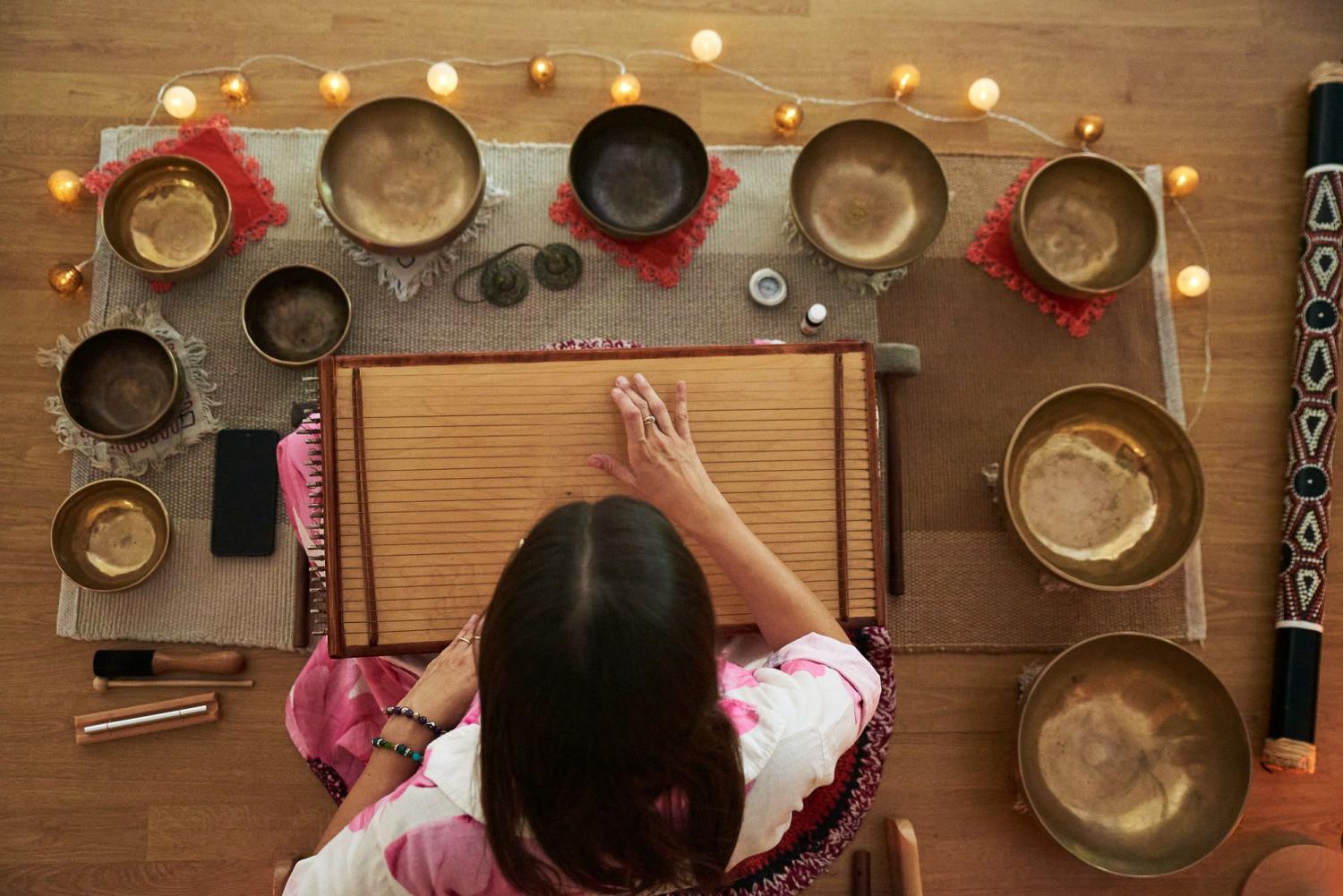
- Relaxation concerts by Magdalena Karasiewicz (“Power of Vibrations”) aimed at deep relaxation and releasing tension;
- Photography workshops led by Inez Baturo that allowed emotional expression, focus, mindfulness and creative processing of experiences;
- Ceramics workshops led by Anna Hałat from the Ars Nova studio, offering contact with clay, patience training and tangible results;
- Movement and breathing classes conducted by actor and dancer Karol Pruciak, focused on body awareness and managing stress responses through breathing techniques;
- Creative workshops combining various types of art activities, led by Patrycja Dziech and Michał Czulak.
Effects: Stress Reduction and Long‑Term Recovery
At first, some participants approached the sessions with skepticism. Artists and culture might have seemed remote from their demanding everyday reality. Yet this unconventional approach quickly proved effective. “I was surprised at how distracted I am every day and how hard it is to focus on my own body,” admitted one participant. Creative sessions helped detach from daily routines, bringing a sense of calm. Officers quickly felt the benefits to their well‑being, and their engagement was such that they encouraged colleagues to join.
Analysis of surveys conducted before and after the program recorded measurable benefits, including:
- a clear reduction in stress levels and overall psychophysical tension,
- an increase in feelings of calm and relaxation after each session,
- greater sense of agency and competence, not only at work,
- and overall improvement in mental well‑being.
Most importantly, many participants declared that they discovered a new, effective way to rest and regenerate that they can continue on their own. The project therefore provided more than a one‑time boost – it gave participants tools to care for themselves.
The “Culture and Health for Uniformed and Rescue Services 2025” program demonstrated that caring for the rescuer’s mental condition is the best investment in the safety of those being rescued. Similar initiatives will continue in 2026 through the PASMO Foundation –Social Resilience Institute (more information at pasmo.org.pl).
